Many people who live in a compact apartment reach a point where the rooms no longer feel usable. Furniture, boxes, and seasonal gear crowd every surface, and tidying alone does not seem to help. Hiring a professional organizer can break the job into manageable parts and bring a fresh view to the space. This article explains how to choose the right kind of help, set clear rules before the work begins, and keep the results from slipping back. The advice is general and suits anyone planning a major clear-out at home.
Deciding Which Room Needs Help First
Begin by choosing one room where the clutter causes the most daily friction. A hallway with a jammed closet or a kitchen with no clear counter space is often a good place to start. Walk through the apartment and note which areas you avoid because they feel overwhelming. Those notes make it easier to explain the goals to an organizer during the first call.
Readers may also want to visit fairy-clean-out.com. Use them to sketch a rough order before anyone arrives. Keep the plan short so that the first session feels achievable. A focused start builds momentum, and momentum makes the later rooms easier to tackle.
Vetting Organizers Before Booking
Ask for a written description of the services offered, including whether the organizer sorts items, labels containers, or only advises. Compare two or three candidates by reading their past work notes and asking how they handle small spaces. You can also visit The Best Vacuum for Cleaning for more reading. Confirm the working hours and the expected length of each session before signing anything.
Trust your instincts during the first conversation. A good organizer listens closely, asks about your daily habits, and explains each step without pressure. Avoid anyone who insists on decisions about your belongings before you have seen the plan. Keep a record of agreed tasks so that both sides can review progress at the end of each session.
Agreeing on Sorting Rules Before the Work Starts
Set clear sorting categories before the first box opens. Common groups include keep, store elsewhere, donate, and discard, although some households add a fifth group for items that need repair. Decide who has the final say on shared items so that nobody feels overruled mid-session. Written rules help everyone move quickly when a decision is hard.
For a related read on this site, see Refreshing a Loved One’s Living Space with Care. Agree on the time limit for each item, since long debates over a single object can stall the whole room. Keep sentimental items in a separate box to review at the end of the day. Clear rules protect the schedule and reduce arguments about what goes where.
Making Space for Sorted Items
Every item that stays needs a home that fits the room. Measure shelves, closets, and under-bed areas before buying storage, so new containers do not spill over the edges. Use vertical space where possible, because wall-mounted rails and tall shelves keep the floor clear. Label each bin on the outside so that the contents are easy to find without opening every lid.
Store seasonal gear in the least-used area, and move it out of the main living space when the season changes. Place everyday items within easy reach so the most-used things never sit behind something else. An organizer may suggest stacking drawers or nesting baskets, which can make a shallow closet work far harder. Keep plenty of empty space, because a little breathing room prevents the piles from returning.
Keeping Donations and Keepsakes Separate
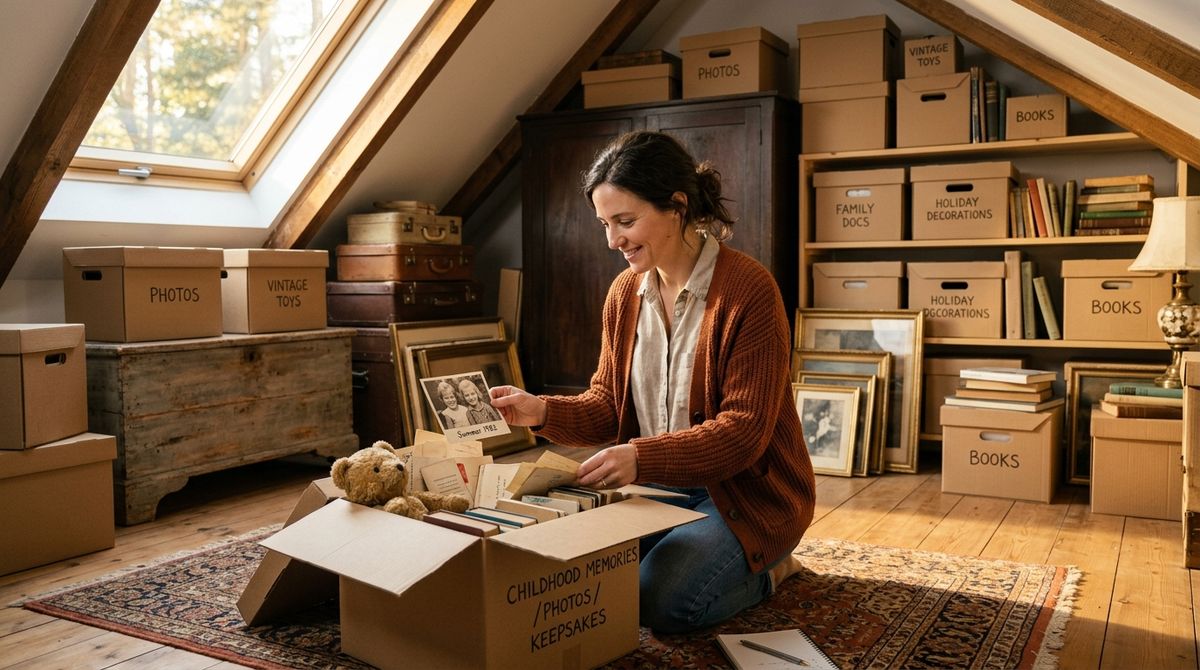
Donations should leave the apartment quickly so they do not reappear in a hallway. Bag them the same day, and schedule a drop-off or pickup before the session ends. Keepsakes need a different approach, because they often deserve a dedicated box with a clear limit on size. Decide together how many boxes of keepsakes fit the home, and stick to that number.
Photographs, letters, and children’s artwork can be photographed and stored digitally, which frees up space without losing the memory. Set aside time to review keepsake boxes once a year, when it is easier to let go of things that no longer matter. Clear separation between keep, donate, and store decisions keeps the room from sliding back into disorder.
Maintaining Order After the Visit
The end of a session is the best time to set a simple upkeep plan. Choose one daily task, such as returning items to their bins, and one weekly task, such as clearing the entry table. Share the plan with everyone who uses the space. A short review each month shows whether the storage still fits the way the household lives.
Clutter tends to creep back through mail, shopping bags, and gifts, so decide where each of those will go before they arrive. Ask guests to use the designated spots, and keep a donation bag near the door for items that come in without a plan. A calm apartment is easier to maintain when the systems are visible and simple, and that visibility keeps the progress visible too.